
Your customers are online. The real question is calls to action find you, trust you, and choose you?
For a small business, digital marketing isn’t about being everywhere at once. It’s about being visible in the right places, communicating the right message, and turning attention into genuine business opportunities.
In 2026, customers can discover a business through Google searches, Instagram posts, short-form videos, advertisements, recommendations, websites, and even AI-powered search experiences. That makes having a digital presence important, but simply having one isn’t enough.
A successful digital strategy connects different channels and gives each one a clear purpose.
Here are 10 practical digital marketing strategies that can help small businesses build visibility, attract potential customers, and create sustainable online growth.
1. Build a Strong Foundation With a Professional Website
Your website is often the place where interested customers decide whether your business is worth contacting.
A social media profile can introduce your brand, but your website gives you much more control over the customer journey.
A good business website should:
- Clearly explain what you offer
- Show who you serve
- Make your value proposition obvious
- Work properly on mobile devices
- Load quickly
- Include clear asis: can calls-to-action
- Make it easy to contact you
- Build trust through testimonials, projects, or useful information
Instead of thinking of your website as an online brochure, think of it as a 24/7 sales and information platform.
If someone discovers your business today, your website should answer their most important questions before they even contact you.
2. Make Google Work for Your Business With SEO
Imagine having an excellent service but being difficult to find when potential customers search for it.
That’s where Search Engine Optimization (SEO) comes in.
SEO helps your website become more discoverable when people search for topics, services, or solutions related to your business.
A practical SEO strategy can include:
- Keyword research
- Helpful website content
- On-page optimization
- Technical SEO
- Internal linking
- Local SEO
- Optimized page titles and descriptions
- High-quality backlinks
- Regular content publishing
The goal shouldn’t simply be to rank for random keywords.
The better question is………
What are my potential customers searching for before they buy from me?
Those searches can reveal opportunities to create pages and content that actually help your audience.
3. Treat Social Media as a Relationship-Building Channel
Social media isn’t just a place to post promotional graphics.
It’s an opportunity to show people why your brand deserves their attention.
For small businesses, an effective social media strategy can combine:
Educate → Entertain → Demonstrate → Engage → Convert
For example, a digital marketing agency could share:
- Marketing tips
- Before-and-after examples
- Client results
- Common business mistakes
- Industry insights
- Behind-the-scenes content
- Short educational videos
- Frequently asked questions
Instead of asking people to buy something in every post, give them reasons to remember your brand.
When the need for your service eventually appears, you want your business to be one of the first names they think about.
4. Turn Attention Into Leads
Getting website visitors or social media followers is great.
But attention isn’t the same as a lead.
A lead-generation strategy gives interested people a clear next step.
Depending on your business, that could be
- Request a quote
- Book a consultation
- Send a WhatsApp message
- Fill out a contact form
- Download a guide
- Request a demo
- Call your business
Your calls-to-action should be specific.
Instead of simply writing:
“Contact us.”
Try something more meaningful:
“Get Your Free Digital Growth Consultation.”
The easier you make the next step, the easier it becomes for interested visitors to start a conversation.
5. Create Content That Answers Real Questions
Content marketing works best when it starts with the audience—not the company.
Ask yourself:
What questions does my customer ask before purchasing?
Those questions can become:
- Blog articles
- Instagram carousels
- Reels
- YouTube videos
- Guides
- FAQs
- Infographics
- Email content
For example, a local business might receive questions such as:
“How much does this service cost?”
“How long does it take?” is a call.
“Which option is right for me?”
“Why should I choose this instead of the alternative?”
Each question represents a potential piece of content.
Over time, useful content can turn your website and social profiles into resources that people return to.
6. Use Paid Advertising Strategically
Organic marketing can take time.
Paid advertising can help businesses reach specific audiences more quickly, but only when the strategy behind the campaign is strong.
Paid advertising can include platforms such asUse It
- Google Ads
- Meta Ads
- Instagram Ads
- Facebook Ads
- Remarketing campaigns
The mistake many businesses make is focusing entirely on getting clicks.
A better approach is to consider the complete journey:
Ad → Landing Page → Offer → Lead → Follow-up → Customer
If the advertisement gets clicks but the landing page doesn’t convince visitors to take action, increasing the advertising budget won’t solve the underlying problem.
Good advertising starts with a strong offer and a clear customer journey.
7. Build a Consistent Brand Identity
People don’t only remember what a business sells.
They remember how the business looks, sounds, and makes them feel.
Consistency across your:
- Website
- Advertisements
- Business listings
- Presentations
- Marketing materials
can make your business appear more professional and recognizable.
Your colors, typography, imagery, messaging, and tone should feel like they belong to the same brand.
For a small business competing against larger companies, strong branding can help create a more credible first impression.
8. Don’t Ignore Local Search
If your business serves a particular city or geographic area, local visibility can be extremely valuable.
Potential customers often search for businesses using phrases such as:
“digital marketing agency near me”
“SEO agency in [city]”
“website development company near me”
A properly managed Google Business Profile, consistent business information, relevant website content, customer reviews, and local SEO can help strengthen your presence in local search.
But remember: your online information should accurately represent your actual business and service area.
9. Measure What Actually Matters
Digital marketing gives you something traditional marketing often struggles with:
measurable data.
But having hundreds of numbers doesn’t automatically mean you understand your marketing.
Instead, focus on metrics connected to your business goals.
Depending on your strategy, these might include:
- Website traffic
- Organic search visibility
- Qualified leads
- Cost per lead
- Conversion rate
- Engagement
- Advertising return
- Form submissions
- Phone calls
- WhatsApp inquiries
For example, getting 10,000 website visitors sounds impressive.
But if only two people inquire, the traffic may not be reaching the right audience.
The goal isn’t more numbers. The goal is better business outcomes.
10. Connect Everything Into One Strategy
This is where many small businesses can make a significant improvement.
SEO shouldn’t operate separately from content.
Content shouldn’t operate separately from social media.
Paid advertising shouldn’t operate separately from your website.
And your website shouldn’t operate separately from your lead-generation process.
Think of your digital marketing as an ecosystem:
SEO brings discovery.
Content builds trust.
Social media creates engagement.
Paid advertising expands reach.
Website development creates the destination.
Lead generation turns interest into opportunities.
When these pieces work together, your marketing becomes much more than a collection of individual activities.
The Bottom Line
You don’t need to implement every digital marketing strategy overnight.
Start with the fundamentals:
Build a strong website.
Become easier to find.
Create useful content.
Build relationships through social media.
Give potential customers a clear way to contact you.
Use paid advertising when it makes strategic sense.
Measure the results and improve continuously.
Digital marketing isn’t about chasing every new trend.
It’s about understanding your audience, communicating your value clearly, and creating a system that helps your business move from visibility → trust → enquiry → customer.
Ready to Build Your Digital Growth Strategy?
At ZenithArx, we help businesses build and strengthen their digital presence through:
SEO | Social Media Marketing | Lead Generation | Website Development | Content Strategy | Paid Advertising
Whether you’re building your online presence from scratch or trying to improve an existing strategy, the right combination of channels can help you move forward with greater clarity.
Let’s build something great together.
Website: www.zenitharx.com
Phone: +91 73482 23893
WhatsApp: +91 73482 23893
-
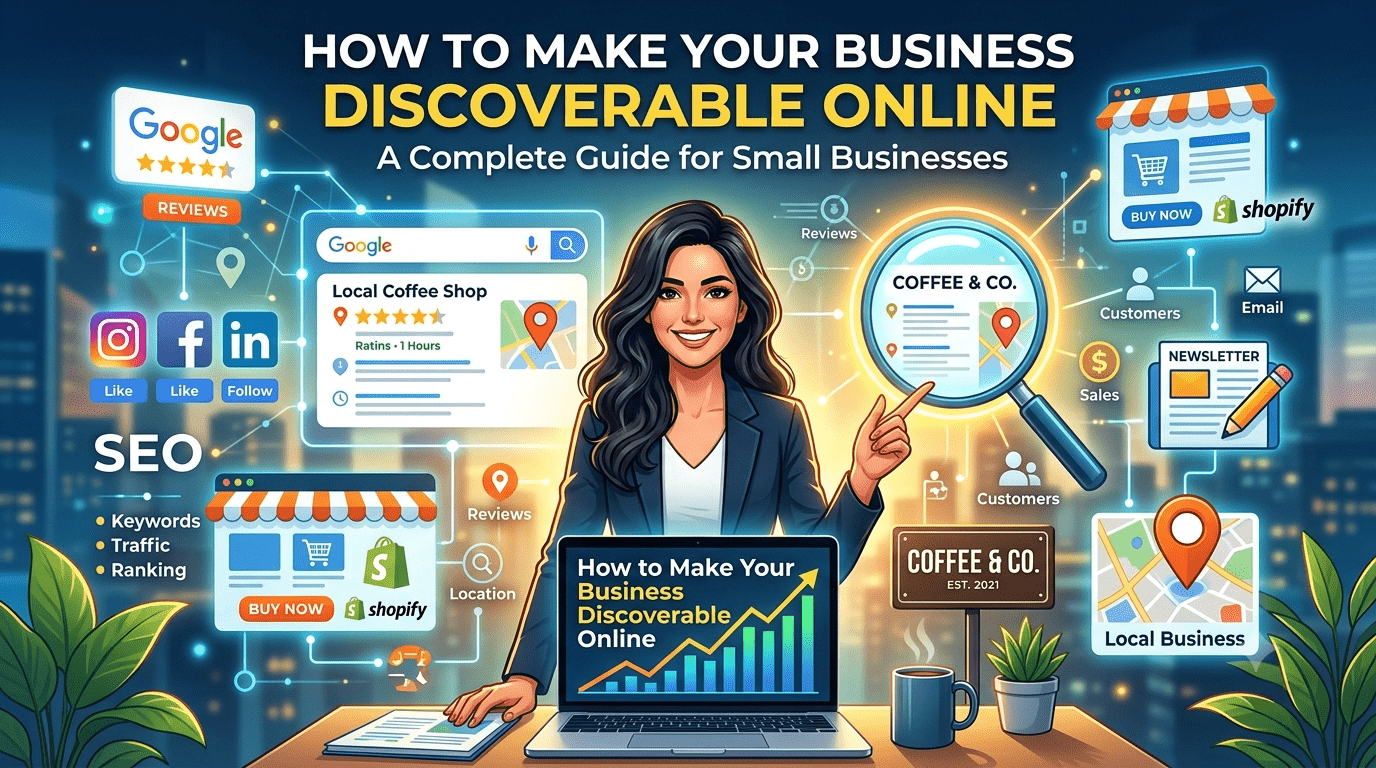
How to Make Your Business Discoverable Online: A Complete Guide for Small Businesses
In today’s digital world, having a great product or service is not enough.Your customers need to find your business online. Whether they search on Google, browse social media, or visit your website, your online presence plays an important role in attracting potential customers. However, getting discovered online does not happen overnight.It requires a combination of strategies such as SEO, content marketing, social media, local optimization, and consistent branding. Here are some effective ways to make your business more discoverable online. 1. Build a Professional Website First, create a professional website that clearly describes who you are, what you offer, and how customers can contact you.Your website should be mobile-friendly, fast, easy to navigate, and designed with clear calls-to-action. Additionally, every important service should have its own relevant page so that both users and search engines can better understand your business. 2. Optimize Your Website for SEO Search Engine Optimization (SEO) helps your website appear when people search for products or services related to your business.Start by researching the keywords that your potential customers are actually using. Then, use these keywords naturally in your page titles, headings, content, URLs, and meta descriptions.Also, ensure your website loads quickly and provides a good experience on mobile devices. 3. Create and Optimize Your Google Business Profile If you serve customers locally, a Google Business Profile can significantly enhance your visibility.Add your business name, category, services, phone number, website, working hours, photos, and location information. Moreover, encourage satisfied customers to leave genuine reviews.Positive reviews can build trust and make your business more appealing to potential customers. 4.…
-

10 Digital Marketing Strategies Every Small Business Should Use in 2026
Your customers are online. The real question is calls to action find you, trust you, and choose you? For a small business, digital marketing isn’t about being everywhere at once. It’s about being visible in the right places, communicating the right message, and turning attention into genuine business opportunities. In 2026, customers can discover a…